

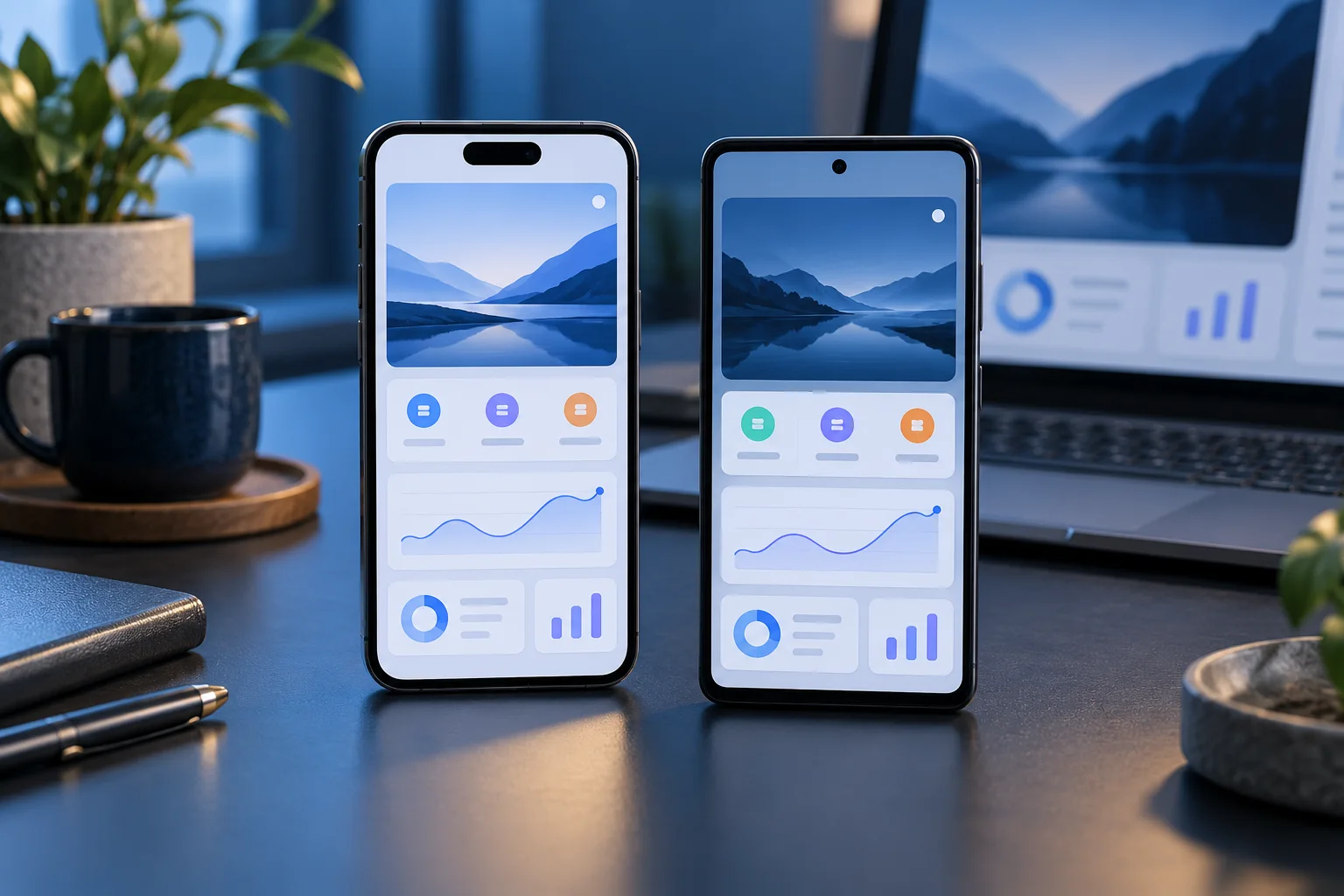
The choice between native and cross-platform development is a project decision, not a contest with one permanent winner. The right approach depends on the experience you need, device capabilities, the team that will maintain it, and the cost of change over time. Begin with requirements and validate the uncertain parts before choosing a framework.
Start with the product requirements
List the platforms your audience actually uses and the device features the app depends on. Consider camera use, notifications, background activity, offline behaviour, accessibility, and integrations. Distinguish an occasional feature from the main reason the app exists. A business app centred on standard forms presents a different engineering problem from a product whose core interaction depends on specialised device behaviour.
Understand what is shared and what is not
A cross-platform approach can share parts of implementation, but that does not remove platform-specific work. Permissions, distribution, device testing, and some integrations still need attention for each platform. Native approaches may offer closer alignment with platform tools while requiring separate implementation effort. Ask a team to explain the expected division of work for your requirements instead of accepting a universal cost-saving percentage.
Test the highest-risk interaction early
Choose a small technical proof for the requirement most likely to affect the decision. That might involve a device integration, a complex animation, unreliable connectivity, or a particular accessibility interaction. Build enough to observe behaviour on representative devices. A small experiment with written findings is more useful than selecting technology based only on a familiar brand or an attractive demo.
Include the maintenance team in the choice
Ask who will diagnose failures, update dependencies, respond to platform changes, and release fixes after launch. Consider the skills available and whether documentation will allow someone else to work on the product. A choice that accelerates the first release may create difficulties if nobody can maintain its specialised components. Include a practical handover and support plan in the comparison.
- Which features require platform-specific implementation?
- What will be tested on physical devices?
- Who owns updates and release credentials?
- What assumptions does the estimate depend on?
Compare a defined scope, not a slogan
Request estimates against the same journey, integrations, quality expectations, and support responsibilities. Separate development, design, testing, store preparation, and ongoing maintenance. Discuss what would change the estimate and which unknowns require discovery. The final decision should record the trade-offs accepted so future team members understand why the approach was selected.
Choose the approach that fits the product and its operating team. Where an important requirement is uncertain, fund a small feasibility test before committing the full build.
See how our app development service can help